

Al Jalali Fort is one of the most striking historic landmarks in Old Muscat, rising dramatically above the entrance to Muscat’s historic harbor. With its rugged stone walls, defensive towers, and commanding position beside the Gulf of Oman, the fort tells a fascinating story of Portuguese expansion, Omani resistance, royal history, and changing military strategy.
Although visitors cannot normally enter Al Jalali Fort as a regular public attraction, its imposing exterior remains an unforgettable part of the Old Muscat skyline. From viewpoints around the harbor, you can appreciate how its position helped control access to the city centuries ago.
The fort is also closely associated with Al Mirani Fort, its famous counterpart on the opposite side of the historic harbor. Together, these two fortifications helped create a powerful defensive system around Old Muscat.
If you are planning a trip to Oman, understanding the history behind Al Jalali Fort can make your visit to Old Muscat much more meaningful.
Al Jalali Fort: A Historic Landmark of Old Muscat
Al Jalali Fort stands on a rocky outcrop overlooking the Gulf of Oman at the eastern side of Old Muscat’s historic harbor.
Its elevated position was not chosen simply for dramatic scenery. The location provided an important military advantage, allowing defenders to monitor ships approaching the harbor and protect one of Oman’s most strategically important coastal settlements.
Today, the fort forms part of the remarkable historic landscape of Old Muscat.
The surrounding area includes Al Alam Palace, Al Mirani Fort, the National Museum, traditional architecture, and the dramatic mountains that surround the old city.
Experience Oman describes Muscat as a city where historic forts, palaces, museums, traditional souqs, and coastal landscapes come together, making the capital particularly rewarding for travelers interested in history and culture.
For travelers who enjoy historic architecture, Al Jalali Fort Oman is one of those landmarks that deserves attention even when viewed from outside.
Al Jalali Fort: Portuguese Origins and Early History
The story of Al Jalali Fort goes back to the period when Portuguese forces controlled important parts of the Omani coast and sought to dominate maritime trade routes in the region.
The present fort was constructed by the Portuguese during the 1580s on or around earlier defensive foundations. Historical sources place its major Portuguese construction between approximately 1586 and 1588.
The Portuguese understood the strategic importance of Muscat.
The natural harbor offered shelter for ships, while the surrounding mountains created a narrow and defensible coastal environment.
By establishing strong fortifications around the harbor, the Portuguese could monitor maritime traffic and strengthen their position in the region.
Al Jalali Fort was therefore much more than an isolated castle.
It formed part of a wider defensive network designed to control access to Muscat.
Its location opposite Al Mirani Fort was particularly important, creating a fortified relationship across the harbor.
Al Jalali Fort: Why Its Location Was So Important
One of the most interesting things about Al Jalali Fort Muscat is its position.
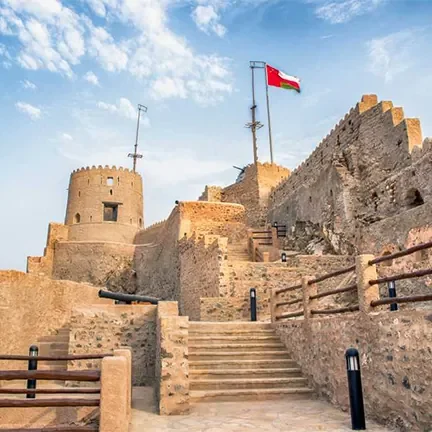
The fort sits high above the water on steep rocky terrain, giving it a commanding view over the harbor.
This natural setting made the fort difficult to attack from land.
The steep rock also reduced the number of practical approaches to the fortress. Historical descriptions note that access involved a steep staircase cut into the rock, reinforcing the defensive character of the site.
From a military perspective, the location offered several advantages.
Defenders could observe approaching ships, protect the harbor, and use elevated artillery positions against potential attackers.
The fort’s relationship with Al Mirani Fort made the harbor even more heavily defended.
Today, that same location gives visitors spectacular views of the sea, mountains, harbor, and historic buildings of Old Muscat.
The scenery that once had a military purpose is now one of the reasons the area is so popular with photographers and history enthusiasts.
Al Jalali Fort: Five Fascinating Historical Facts
1. Al Jalali Fort was built during the Portuguese period
The present fort dates largely to the Portuguese period of the 16th century.
It was constructed as part of the Portuguese effort to strengthen Muscat’s harbor defenses after repeated attacks on the city.
The fort was eventually captured by Omani forces in 1650, marking an important moment in Oman’s struggle to regain control of Muscat.
2. Al Jalali Fort has an earlier defensive history
Although the Portuguese rebuilt the fortification in the 1580s, historical accounts indicate that earlier defensive structures existed on the site.
This means the rocky outcrop was already recognized as strategically valuable before the present fortress took shape.
The site therefore represents several layers of Muscat’s military history rather than a single period.
3. Al Jalali Fort was connected to royal history
Over the centuries, the fort was not used exclusively for military purposes.
Historical accounts record periods when it served as a place of refuge or imprisonment for members of Oman’s ruling family.
This gives the fortress another dimension beyond its role in coastal defense.
4. Al Jalali Fort became a major prison
During much of the 20th century, the fort was used as a prison.
Its difficult location and restricted access made it a practical place for confinement.
The prison function eventually ended during the 1970s as Oman entered a period of major modernization and transformation.
This chapter of the fort’s history is very different from the picturesque landmark visitors see today.
5. Al Jalali Fort was restored
The fortress underwent restoration in the 20th century.
Historical references place a significant restoration in 1983, after which the site was associated with a museum of Omani cultural history and continued to have a restricted role rather than becoming a normal public tourist attraction.
Al Jalali Fort: Architecture and Defensive Design
The architecture of Al Jalali Fort reflects the practical requirements of a coastal military fortress.
Its thick stone walls were designed to withstand attack, while towers and gun positions allowed defenders to monitor the harbor.
The fortress was adapted to the natural shape of the rocky outcrop rather than being built on a flat piece of land.
That is one reason the structure appears to grow directly from the mountain.
Historical descriptions also mention a cistern for storing water, an essential feature for a fortress whose defenders might need to remain isolated for extended periods.
The fort’s elevated gun platforms were another important feature.
From these positions, artillery could be directed toward the harbor.
Even when viewed from a distance today, it is easy to understand why the Portuguese and later Omani rulers considered the location so valuable.
Al Jalali Fort: What Can Tourists See Today?
This is an important point for anyone planning a Muscat historical sites itinerary.
Al Jalali Fort is not a conventional attraction where visitors can simply purchase a ticket and explore the interior.
Current references describe the fort as closed to general public access, with entry restricted to authorized or distinguished visitors.
That does not mean it should be removed from your Muscat itinerary.
Quite the opposite.
The exterior position of the fortress makes it one of the most visually impressive landmarks in Old Muscat.
Visitors can admire the fort from surrounding areas and combine the experience with other historic attractions in the district.
Take your time rather than simply stopping for one photograph.
Look at how the fort sits above the harbor.
Notice the relationship between the rocky mountains, sea, defensive walls, and traditional white buildings.
That combination is what makes Old Muscat so distinctive.
Al Jalali Fort: Best Photo Opportunities
For photographers, Al Jalali Fort Oman is particularly rewarding.
The contrast between the dark rocky cliffs, blue Gulf of Oman, pale buildings, and historic fortress creates a dramatic composition.
Early morning can provide softer light and fewer people around the surrounding viewpoints.
Late afternoon is another excellent time because the changing sunlight can emphasize the texture of the fortress walls and surrounding mountains.
A telephoto lens can be useful because access restrictions mean that many of the best photographs are taken from outside the fort.
Avoid climbing restricted areas or attempting to enter closed sections simply to get a better photograph.
Respecting access restrictions is essential when photographing historic and government-related sites in Oman.
Al Jalali Fort: What to See Nearby
One advantage of visiting Al Jalali Fort is its location in one of Muscat’s richest historical districts.
You can combine the fort with several nearby attractions and create a fascinating Old Muscat sightseeing route.
Al Mirani Fort
Across the harbor stands Al Mirani Fort, another major Portuguese-era fortress.
Experience Oman describes Al Mirani as a Portuguese fortress rebuilt in 1588 from an earlier tower, with later restoration and development under Omani rulers.
The fort offers an excellent opportunity to understand how military architecture shaped the old harbor.
Al Alam Palace
Al Alam Palace is one of the most recognizable landmarks in Old Muscat.
Its distinctive blue and gold facade provides a beautiful contrast to the rugged mountains and historic forts surrounding it.
The palace is primarily a ceremonial royal residence, so visitors generally appreciate it from the surrounding area rather than expecting a regular interior tour.
National Museum of Oman
The National Museum is another excellent addition to your Old Muscat itinerary.
Located in the historic area, the museum presents important aspects of Oman’s history and identity through extensive collections and galleries. Experience Oman states that the museum houses more than 7,000 rare treasures.
It is especially useful if you want more historical context after seeing Muscat’s forts and old harbor.
Old Muscat
Do not rush through Old Muscat.
Walk through the area, admire the traditional architecture, look toward the mountains, and take time to appreciate how closely the historic city is connected to the sea.
This is where the story of Al Jalali Fort makes the most sense.
The fort was not built in isolation.
It was part of a complete maritime landscape shaped by trade, military power, geography, and Oman’s relationship with the sea.
Al Jalali Fort: Best Time to Visit the Area
For comfortable outdoor sightseeing, the cooler months are generally preferable.
From approximately October through April, temperatures are typically more comfortable for walking and exploring Muscat’s outdoor attractions.
The early morning and late afternoon can also be pleasant times to photograph the fortress and surrounding landscape.
During hotter months, plan outdoor sightseeing carefully.
Carry water, wear comfortable footwear, use sun protection, and avoid spending long periods in direct midday sunlight.
For more detailed seasonal planning, see our internal guide to Best Time to Visit Muscat.
Al Jalali Fort: Practical Tips for Visitors
If you are planning to see Al Jalali Fort, keep these points in mind.
Do not assume the fort is open for public entry. Access is restricted, so enjoy the landmark from permitted viewing areas unless you have official authorization.
Bring a camera. The harbor, mountains, sea, and fortress create excellent photography opportunities.
Wear comfortable shoes. Old Muscat sightseeing involves walking and uneven surfaces in some areas.
Carry water. Muscat’s climate can be hot, especially outside the cooler season.
Respect photography restrictions. Avoid photographing sensitive government, military, or restricted areas.
Combine attractions. Al Jalali Fort works best as part of a wider Old Muscat itinerary rather than as a standalone stop.
Allow enough time. Old Muscat has several important landmarks close to one another, so rushing through the area means missing much of its atmosphere.
For more practical planning advice, our Muscat Travel Guide covers transportation, customs, sightseeing, and other useful information for first-time visitors.
Al Jalali Fort: A Must-See View in Old Muscat
Although Al Jalali Fort is not a conventional museum attraction open for unrestricted public exploration, it remains one of the defining landmarks of Muscat.
Its value comes from its history, architecture, strategic position, and relationship with the old harbor.
Standing beneath the mountains and looking toward the fortress, it is easy to imagine the importance this rocky outcrop once had.
Ships approaching the harbor would have encountered a heavily defended coastline.
Today, the scene is far more peaceful.
The Gulf of Oman stretches beyond the fort, traditional buildings sit beneath the mountains, and the old city provides a glimpse into Oman’s long connection with maritime trade and regional history.
That contrast between a turbulent past and a peaceful present is part of what makes the site memorable.
Check the official visit Oman website Experience Oman.
Explore Al Jalali Fort and Old Muscat with Glory Tours
If you want to explore Al Jalali Fort, Al Mirani Fort, Al Alam Palace, the National Museum, Mutrah Souq, and other historic attractions without spending your day organizing routes, parking, and transportation, consider a private Muscat Tours experience with Glory Tours Salalah.
A private tour can make your Old Muscat sightseeing much easier, especially if you are visiting Oman for the first time.
Your itinerary can be arranged around the attractions that interest you most, giving you more flexibility throughout the day.
For travelers who prefer a female guide, female tour guide availability can also be requested, subject to advance arrangement and availability.
You can also combine historic Muscat with other attractions, including Mutrah Souq and the Corniche.
Our guide to Mutrah Souq is useful if you want to continue your cultural exploration after visiting Old Muscat.
For a broader list of landmarks, explore our guide to Top Attractions in Muscat.
Al Jalali Fort: Frequently Asked Questions
Is Al Jalali Fort open to tourists?
No. Al Jalali Fort is not generally open to the public for regular interior visits. Current references describe access as restricted, so travelers should plan to admire and photograph the fort from permitted surrounding locations.
Who built Al Jalali Fort?
The present fortress was built by the Portuguese during the 1580s on or around earlier defensive foundations. Historical references place major construction between approximately 1586 and 1588.
Where is Al Jalali Fort located?
Al Jalali Fort is located in Old Muscat, overlooking the historic harbor and Gulf of Oman.
Why was Al Jalali Fort built?
Its main purpose was to strengthen the defense of Muscat’s harbor and protect the city from maritime threats.
Was Al Jalali Fort a prison?
Yes. The fort served as a prison during parts of its later history and became a major prison during much of the 20th century before that role ended in the 1970s.
Can I take photos of Al Jalali Fort?
Visitors can photograph the fortress from appropriate public viewing areas, but travelers should respect any photography restrictions around government or restricted locations.
What can I visit near Al Jalali Fort?
Nearby attractions include Al Mirani Fort, Al Alam Palace, the National Museum, and the historic Old Muscat area. Experience Oman identifies several of these as key attractions in Muscat.
Al Jalali Fort: Conclusion
Al Jalali Fort is more than an impressive stone fortress overlooking Muscat’s harbor.
It is a reminder of Oman’s strategic position along the historic maritime routes of the Arabian Peninsula and the centuries of conflict, trade, and political change that shaped the country.
Built largely during the Portuguese period, later captured and adapted by Omani rulers, and eventually used as a prison, the fort has passed through several very different chapters of history.
Today, its dramatic position above the Gulf of Oman makes it one of the most recognizable sights in Old Muscat.
You may not be able to walk through its interior like a conventional tourist attraction, but seeing Al Jalali Fort from the surrounding historic district still gives you an impressive sense of its scale and strategic importance.
Combine it with Al Mirani Fort, Al Alam Palace, the National Museum, and the streets of Old Muscat, and you have the foundations of an unforgettable historical journey through Oman’s capital.
If you prefer to explore without the hassle of arranging transportation, routes, parking, and sightseeing stops yourself, consider a private Muscat Tours experience with Glory Tours Salalah.
The team can help create a comfortable itinerary around your interests, with female tour guide availability on request, subject to availability.