
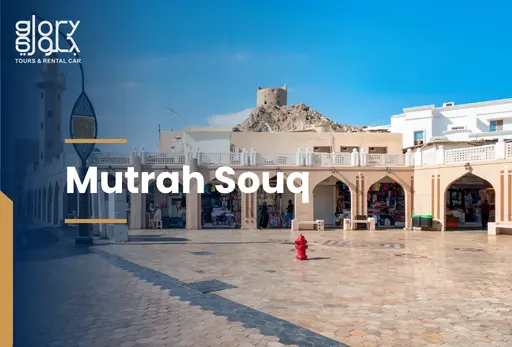
Mutrah Souq is one of the best places in Muscat to experience the traditional side of Oman through its scents, colors, crafts, clothing, jewelry, spices, and everyday market life.
Located beside the famous Mutrah Corniche, this traditional marketplace is more than somewhere to buy souvenirs. Its narrow passages, small shops, old-fashioned displays, and lively atmosphere create an experience that feels very different from a modern shopping mall.
The official Experience Oman tourism platform describes Mutrah Souq as a traditional Arab market with a maze of alleys filled with shops and treasures. It is also listed among the important attractions of Muscat.
For first-time visitors, the biggest attraction is the atmosphere.
You can smell frankincens in Mutrah Souq before finding the shop selling it. You may notice silver jewelry displayed beside traditional clothing, perfumes, spices, decorative items, and handmade crafts.
If you enjoy cultural travel, give yourself time to wander rather than rushing from one shop to another.
And if you are planning a wider Muscat itinerary, you can also read our [Muscat Travel Guide] for practical advice on transport, dress, attractions, and planning your visit. Muscat Travel Guide
Mutrah Souq and the Historic Trading Heritage of Muscat
Muscat’s location along the coast of the Gulf of Oman helped it develop strong maritime connections with other parts of the region and the wider Indian Ocean world.
Mutrah’s waterfront was closely connected to this commercial history, with ships and merchants bringing goods through Oman’s ports.
The market you see today reflects that long trading tradition through the variety of products sold inside it.
Frankincense, perfumes, textiles, silver, spices, traditional clothing, decorative objects, and handicrafts all reflect different aspects of Omani culture and the country’s historic connections with neighboring regions.
Rather than thinking of the souq simply as a place for shopping, think of it as a living part of Muscat’s cultural landscape.
That is what makes walking through its lanes so enjoyable.
Mutrah Souq Atmosphere and Architecture
One of the first things you notice is the contrast between the busy Mutrah Souq lanes and the calm waterfront outside.
Inside, the passages can feel wonderfully maze-like.
Shopfronts are packed with colorful merchandise, while traditional-style architecture gives the market its distinctive character.
The experience changes throughout the day.
During quieter periods, you can take your time looking at individual items and speaking with shopkeepers. Later, the atmosphere can become much livelier as residents and visitors move through the market.
If you enjoy photography, look beyond the obvious souvenir displays.
Details such as carved doors, traditional lamps, silver jewelry, colorful fabrics, spice arrangements, and old-style shop interiors can make excellent photographs.
Mutrah Souq Opening Hours and Best Time to Visit
In Mutrah Souq opening times at individual shops can vary, so it is better not to depend on a rigid timetable for every stall.
Many businesses traditionally operate around the cooler parts of the day, with activity becoming particularly lively later in the afternoon and evening.
The official Experience Oman platform currently identifies September through May as the recommended period for visiting Mutrah Souq.
For the atmosphere, evening is often the most enjoyable choice.
The heat becomes more comfortable, the waterfront becomes pleasant for walking, and the market takes on a lively local character.
For families with young children, an earlier visit may be easier because the market can be less crowded.
During Ramadan, the daily rhythm changes significantly. Visitors should also remember that eating, drinking, and smoking in public during daylight hours are forbidden during Ramadan in Oman.
Always check current local conditions and individual shop hours before making a special trip.
Mutrah Souq: What to Buy in Oman
Shopping in Mutrah Souq is one of the main reasons travelers visit the market.
However, the best souvenirs are not necessarily the most expensive ones.
Look for something that represents your experience of Oman and that you will genuinely enjoy taking home.
Here are some of the most popular categories to explore.
Frankincense and Luban
Frankincense is one of the most recognizable products associated with Oman.
It has deep cultural and historical importance, particularly because of the traditional frankincense-producing regions of southern Oman.
At the market, you will find different grades and appearances of frankincense resin.
Ask the seller about its origin and intended use before buying.
If you are interested in Oman’s frankincense heritage, combining a Muscat visit with a trip to Dhofar can add another dimension to the experience.
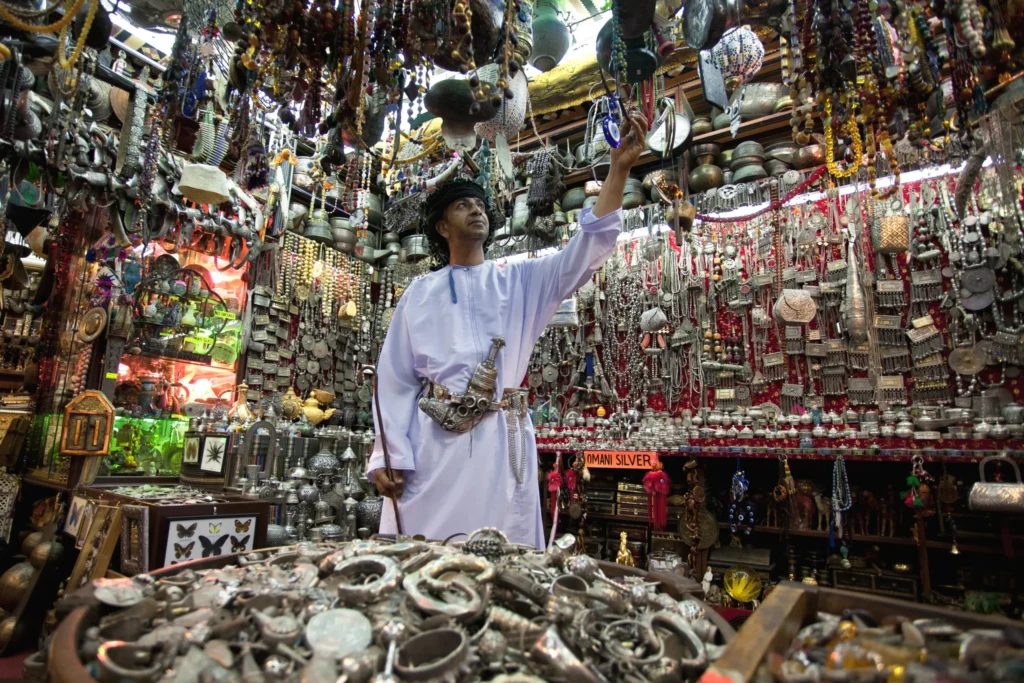
Omani Silver Jewelry
Silver jewelry is another highlight.
Look for traditional rings, bracelets, necklaces, pendants, and other pieces inspired by Omani heritage.
Some designs are simple and suitable for everyday wear, while others are more elaborate and clearly intended as decorative or ceremonial pieces.
If you are buying silver, ask about the material, craftsmanship, and weight.
Do not be afraid to compare several shops before making your decision.
Kummahs and Traditional Clothing
Traditional Omani clothing makes an excellent cultural souvenir.
The kummah, an embroidered traditional cap worn by Omani men, comes in many patterns and colors.
You may also find traditional fabrics and garments associated with Omani dress.
Even if you do not plan to wear them yourself, beautifully embroidered textiles can make memorable gifts.
Khanjars and Traditional Crafts
The khanjar is one of the most recognizable symbols of Omani heritage.
These traditional curved daggers have important cultural and ceremonial associations.
If you are interested in purchasing one, pay attention to the difference between contemporary decorative pieces and genuinely old or antique examples.
For international travelers, it is also wise to check the customs and import regulations of your destination before purchasing any potentially restricted item.
Perfumes and Traditional Fragrances
Perfume shops are another fascinating part of the experience.
You may encounter Arabic fragrances, concentrated oils, traditional perfume blends, incense, and fragrance accessories.
Take your time.
Smell several options rather than buying the first fragrance you encounter.
Traditional scents can be much stronger than the perfumes many international visitors are accustomed to.
Spices, Dates and Omani Sweets
Spices bring another layer of color and fragrance to the market.
Depending on the shop, you may find cardamom, saffron, turmeric, dried ingredients, tea, dates, nuts, and other products.
Omani halwa is another popular choice.
Made using ingredients such as sugar, starch, rosewater, saffron, and nuts, Omani halwa is closely associated with hospitality and special occasions.
Pairing halwa with Omani kahwa is a wonderful way to experience the country’s traditional hospitality.
Mutrah Souq Shopping Tips for First-Time Visitors
Shopping in a traditional market is different from shopping in a fixed-price mall.
The experience is part of the fun.
If bargaining is appropriate, be friendly and respectful rather than treating it as a competition.
Compare prices between several shops before buying something expensive.
For jewelry, ask about weight, material, craftsmanship, and any applicable certification.
For frankincense and perfumes, ask questions about origin and quality.
For larger purchases, make sure you understand exactly what you are buying before paying.
Cash can still be useful for smaller purchases, although payment methods vary between individual shops.
Most importantly, do not feel pressured to buy.
A friendly conversation with a shopkeeper can be part of the experience even when you leave without making a purchase.
Mutrah Souq and Mutrah Corniche
One of the best things about visiting the market is its location.
You can combine your shopping experience with a relaxed walk along Mutrah Corniche.
The waterfront offers a completely different perspective from the narrow market lanes.
Look toward the sea, watch the boats, and then turn back toward the mountains surrounding Muscat.
This combination of mountains, sea, historic architecture, and traditional commerce is one of the reasons Mutrah remains such an appealing part of the capital.
For travelers interested in shopping more broadly, our guide to [Shopping in Muscat] covers traditional markets as well as modern shopping destinations. Shopping in Muscat
Mutrah Souq Nearby Attractions You Can Add to Your Day
You do not need to visit the market as a standalone attraction.
Several important Muscat sights can be combined into the same itinerary.
Mutrah Fort
Mutrah Fort sits above the historic district and provides impressive views across the waterfront and surrounding landscape.
The official Experience Oman platform describes the fort as a historic landmark overlooking Mutrah Corniche and the old harbor.
If you enjoy history and photography, it is a natural addition to your market visit.
Mutrah Corniche
The Corniche is perfect for a relaxed walk before or after shopping.
It is especially enjoyable when temperatures become more comfortable in the late afternoon and evening.
Bait Al Zubair
For a deeper introduction to Omani heritage, consider visiting Bait Al Zubair.
The museum houses collections of Omani artifacts and focuses on heritage, culture, arts, and education. Its official visitor information states that the museum is open daily except Friday, from 9:00 AM to 5:00 PM.
Old Muscat
If you have enough time, continue toward Old Muscat and explore some of the capital’s historic landmarks.
Experience Oman highlights the combination of traditional souqs, historic promenades, forts, museums, and cultural attractions as important parts of Muscat’s character.
Mutrah Souq Photography and Cultural Etiquette
The market is extremely photogenic, but visitors should remember that they are walking through a living community rather than a theme park.
Photograph architecture, products, shop displays, doors, spices, and other details freely where appropriate.
When photographing people, ask permission first.
Oman’s Ministry of Foreign Affairs specifically advises visitors to obtain permission before photographing people and emphasizes respect for local culture and customs.
Dress modestly, especially when visiting religious or traditional areas.
A respectful attitude will make your experience more comfortable and will help ensure that your photographs do not come at someone else’s expense.
Mutrah Souq During Ramadan
Ramadan can make a visit particularly interesting because the rhythm of daily life changes.
During daylight hours, many people are fasting, and visitors should respect this.
Oman’s official visitor guidance states that eating, drinking, and smoking in public during daylight hours are forbidden during Ramadan for both Muslims and non-Muslims.
After sunset and Iftar, the atmosphere changes.
Markets and public spaces can become much livelier as families and friends gather, shop, eat, and socialize.
If you visit during Ramadan, plan around the local rhythm rather than expecting a normal tourist schedule.
Mutrah Souq and Traditional Omani Hospitality
One of the most enjoyable parts of the market is the human interaction.
A shopkeeper may explain how a particular perfume is made, show you different grades of frankincense, or tell you about the design of a traditional piece of silver.
These small conversations can become some of the most memorable moments of a trip.
Take your time.
Ask questions.
Listen to the answers.
You may discover that the story behind an object is more valuable than the object itself.
Mutrah Souq Food and Karak Tea
After walking through the market, take a break.
Around Mutrah and the Corniche, you can find places to enjoy tea, coffee, dates, sweets, and other local refreshments.
Karak tea is a popular choice for travelers who enjoy strong, sweet tea prepared with milk and spices.
Omani kahwa offers a different experience, traditionally served in small cups and often accompanied by dates.
A simple tea break gives you an opportunity to sit back and watch the rhythm of the waterfront.
It is also a good reminder that visiting a traditional market is not only about shopping.
It is about experiencing a place.
Mutrah Souq as Part of a Muscat Tour
If this is your first time in Muscat, combining the market with nearby attractions can save time and make your day much easier.
A practical route could include the Grand Mosque area, Old Muscat, Mutrah Corniche, Mutrah Souq, Mutrah Fort, and another cultural attraction depending on your schedule.
If you are looking for a hassle-free Muscat Tours experience, Glory Tours can arrange private sightseeing around your preferred itinerary.
You can explore Muscat’s cultural landmarks, traditional markets, historic areas, coastline, and other attractions without having to organize every route and stop yourself.
For travelers who prefer a female guide, female tour guide availability can also be requested, subject to advance arrangement and availability.
You can [explore Muscat Tours with Glory Tours Salalah] and discuss the itinerary that best suits your trip. Explore Muscat Tours with Glory Tours Salalah
You can also read our [Best Time to Visit Muscat guide] when deciding when to travel. Best Time to Visit Muscat
For visitors who want to explore beyond the capital, our [Day Trips from Muscat guide] includes ideas for combining cultural sightseeing with Oman’s mountains, wadis, coast, and natural attractions. Day Trips from Muscat
Mutrah Souq Practical Tips Before You Go
A few simple preparations can make your visit much more enjoyable.
Wear comfortable shoes. You will probably walk more than expected.
Carry water. Muscat can be hot, particularly outside the cooler months.
Keep small cash available. Payment options vary between individual vendors.
Compare before buying. This is especially important for jewelry, perfumes, and higher-value souvenirs.
Ask questions. Learning about the origin and craftsmanship of an item makes shopping more interesting.
Respect photography etiquette. Always ask before photographing people.
Dress appropriately. Modest clothing is appreciated in Oman, particularly around traditional and religious areas.
Check current opening information. Shop hours can change, particularly during Ramadan, holidays, or special occasions.
If you need to check entry requirements before traveling to Oman, use the [official Royal Oman Police eVisa service] rather than relying on outdated third-party information. Royal Oman Police eVisa Services.
Conclusion: Mutrah Souq Is More Than Shopping
Mutrah Souq is one of those places where the experience matters just as much as what you buy.
You come looking for frankincense, silver, perfumes, spices, textiles, or a memorable Omani souvenir.
But you leave with something else too.
You remember the narrow lanes, the scent of incense, the colorful displays, the conversations with shopkeepers, the mountains behind the waterfront, and the evening atmosphere along Mutrah Corniche.
That combination makes the market one of the essential cultural experiences in Muscat.
Whether you have only a few hours in the capital or several days to explore Oman, make time to wander through the market without rushing.
Look carefully.
Ask questions.
Try something new.
And when you finally step back onto the Corniche, take a moment to look back at the market you have just explored.
That is when you realize that the best souvenir from Mutrah Souq may not be something you put in your suitcase.
It may simply be the memory of experiencing one of Oman’s most atmospheric historic marketplaces.