
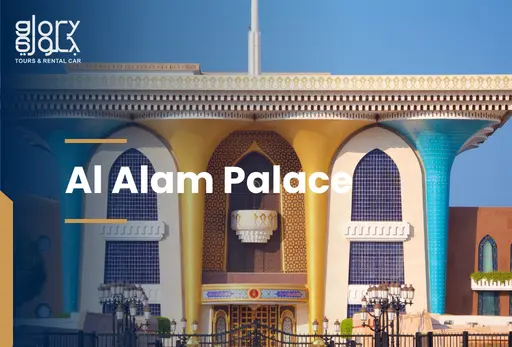
Al Alam Palace is one of the most recognizable landmarks in Muscat and one of the most photographed buildings in Oman.
Located in the heart of historic Old Muscat, the palace stands against a dramatic backdrop of rugged mountains, historic forts, and the Gulf of Oman.
Its instantly recognizable blue and gold facade gives Al Alam Palace a distinctive appearance that visitors rarely forget.
The palace is not simply an architectural attraction. It represents an important part of modern Oman and continues to serve a ceremonial role for the Sultan.
Official Omani tourism information identifies Al Alam Palace as the ceremonial palace of the Sultan and highlights its distinctive blue and gold facade.
For travelers exploring Muscat, a visit is easy to combine with the National Museum, Al Mirani Fort, Al Jalali Fort, Bait Al Zubair Museum, and the Mutrah area.
Al Alam Palace History and Royal Significance
The history of Al Alam Palace is closely connected with Muscat’s role as the historic political center of Oman.
The name “Al Alam” means “The Flag” in Arabic, giving the palace a name that reflects its royal and national symbolism.
The present palace is associated with the modern era of Oman and is best understood today as a ceremonial royal landmark rather than a conventional tourist palace.
It is used for important official occasions and formal receptions, making it one of the most significant state landmarks in the capital.
The palace also forms part of the historic government and royal district of Old Muscat.
Rather than functioning as a museum, Al Alam Palace remains connected to official state activities. That is why visitors experience it primarily from the exterior.
The official Oman tourism platform places the palace among Muscat’s key attractions alongside the National Museum, Al Mirani Fort, Bait Al Zubair Museum, and Mutrah Souq.
Al Alam Palace Architecture and the Famous Blue and Gold Design
The architecture is the first thing most visitors notice.
Unlike the more restrained white and beige architecture found throughout much of Muscat, Al Alam Palace immediately catches the eye with its vivid turquoise-blue and gold details.
The central facade features tall, elegant columns that create a strong sense of symmetry.
The combination of blue, gold, white surfaces, polished stone, and geometric details creates a striking visual identity.
This unusual color palette is one of the main reasons Al Alam Palace has become such an iconic Muscat landmark.
The palace also looks particularly impressive when viewed from the broad approach toward its main entrance.
Palm trees, open spaces, mountains, and historic fortifications add depth to the scene.
The result is an architectural setting that feels unmistakably Omani while also reflecting the formal character of a modern royal landmark.
Al Alam Palace Location in Old Muscat
Al Alam Palace is located in Old Muscat, one of the most historically important parts of the capital.
The palace sits within a landscape where mountains rise dramatically around the historic waterfront.
This makes the location particularly attractive for photographers and travelers interested in Omani history.
One of the most memorable aspects of visiting Al Alam Palace is the contrast between the colorful palace facade and the rugged natural landscape surrounding it.
The official Experience Oman platform lists Al Alam Palace as a major Muscat destination and recommends the period from September to May for visiting.
If you are building a complete Muscat itinerary, you can combine the palace with several attractions in the same historic area.
Can You Enter Al Alam Palace?
This is one of the most common questions travelers ask.
Al Alam Palace is not a conventional public palace museum, and visitors should not expect to enter the royal building.
The main attraction for tourists is the exterior view, surrounding area, architecture, and photography.
This is important when planning your visit.
Instead of expecting an indoor palace tour, treat Al Alam Palace as an impressive architectural and cultural stop within an Old Muscat sightseeing route.
The experience is particularly rewarding when combined with the nearby museums and historic forts.
Always follow signs, security instructions, and any temporary restrictions that may be in place during official events.
Al Alam Palace Best Photo Spots
Photography is one of the biggest reasons travelers include Al Alam Palace in their Muscat itinerary.
The palace’s symmetrical facade makes it especially suitable for architectural photography.
The Central Approach
The central approach toward the palace provides one of the clearest compositions.
Stand back far enough to capture the blue and gold columns together with the surrounding open space.
This creates a balanced photograph with the palace as the main subject.
Al Mirani and Al Jalali Forts
For a wider Old Muscat composition, look toward the surrounding historic fortifications.
The dramatic cliffs and historic forts help place Al Alam Palace within its larger historical setting.
Official Omani tourism information identifies Al Mirani Fort as a major historic landmark and notes its Portuguese origins and later restoration by Omani dynasties.
The combination of royal architecture, mountains, and historic defensive structures makes this one of the most distinctive photographic settings in Muscat.
Evening Photography
The palace can also be attractive in the evening when artificial lighting changes the atmosphere.
The softer conditions after sunset can make the blue and gold details appear particularly dramatic.
If photography is your priority, consider visiting during the late afternoon and staying until after sunset.
Al Alam Palace Best Time to Visit
The best time to visit Al Alam Palace depends on whether you care more about comfortable sightseeing or photography.
Official Oman tourism information currently recommends September through May as the preferred visiting period.
During the cooler months, walking around Old Muscat is generally more comfortable.
Early Morning
Morning can be a good choice for travelers who prefer quieter surroundings and softer natural light.
It can also be easier to combine the palace with other Old Muscat attractions before the day’s heat increases.
Late Afternoon
Late afternoon is excellent for photography.
The changing sunlight can add warmth to the surrounding mountains and bring out the palace’s distinctive colors.
Evening
Evening provides a completely different atmosphere.
The quieter streets and illuminated architecture can make Old Muscat feel especially atmospheric.
Rather than rushing through the area, give yourself enough time to appreciate the palace from different viewpoints.
Al Alam Palace Visitor Tips and Local Etiquette
Visiting Al Alam Palace is straightforward, but travelers should remember that this is a royal and official area.
Dress respectfully, particularly when visiting several cultural attractions in Old Muscat on the same day.
Comfortable shoes are also useful because a sightseeing itinerary around the area can involve walking between several attractions.
Most importantly, respect security barriers and restricted areas.
Do not attempt to enter areas marked as private or restricted.
Photography should also be approached sensibly. Avoid photographing security personnel, restricted facilities, or government areas where photography is prohibited.
A respectful approach allows you to enjoy the architecture without interfering with the palace’s official function.
Al Alam Palace and Nearby Attractions
One of the best things about Al Alam Palace is its location.
You do not need to travel across Muscat to find other major cultural attractions.
National Museum of Oman
The National Museum is one of the most important cultural attractions in the capital.
It offers visitors an opportunity to learn about Oman’s history, maritime heritage, archaeology, culture, and national development.
The official Oman tourism platform specifically recommends the National Museum as one of the attractions to visit around Muscat’s historic area.
Al Mirani Fort
Al Mirani Fort rises dramatically above the historic waterfront.
Its strategic position makes it an important part of the story of Old Muscat and its historic defenses.
The official tourism platform states that the fort was rebuilt in 1588 during the Portuguese period and later underwent restoration under Omani dynasties.
Al Jalali Fort
Together with Al Mirani Fort, Al Jalali helps create the dramatic historic landscape surrounding Al Alam Palace.
The two fortifications are among the defining landmarks of Old Muscat.
Bait Al Zubair Museum
Bait Al Zubair is another excellent addition for travelers interested in Omani heritage.
The museum offers insight into traditional Omani culture and complements the architectural experience of visiting the palace.
Official Oman tourism information lists Bait Al Zubair among Muscat’s key cultural attractions.
Mutrah Souq and Corniche
After exploring Old Muscat, continue toward Mutrah.
Mutrah Souq offers a completely different experience, with traditional shops, frankincense, perfumes, silver, handicrafts, and souvenirs.
The nearby Corniche adds a scenic waterfront experience and is an excellent place to relax after sightseeing.
For more ideas, see our guides to Top Attractions in Muscat and the Muscat Travel Guide.
Al Alam Palace as Part of a Muscat City Tour
A visit to Al Alam Palace works particularly well as part of a private Muscat city tour.
Instead of visiting the palace alone, you can build a route around Old Muscat’s major cultural landmarks.
A well-planned itinerary could include the National Museum in the morning, Al Alam Palace and the historic forts around midday, followed by Bait Al Zubair Museum and Mutrah Souq.
You can then finish the day along the Mutrah Corniche.
This approach gives you a much better understanding of Muscat because you experience architecture, history, culture, markets, and the waterfront within one journey.
The official Oman tourism platform similarly groups Al Alam Palace with several of these major Muscat attractions.
Explore Al Alam Palace with Glory Tours
If you want to explore Al Alam Palace without worrying about directions, parking, transportation, or organizing every stop yourself, consider a private Muscat tour with Glory Tours Salalah.
The company offers Muscat sightseeing experiences designed around travelers’ schedules and interests.
A private tour can make it easier to combine Al Alam Palace with Old Muscat, museums, forts, Mutrah Souq, the Corniche, and other important attractions.
The goal is simple: enjoy Muscat without the hassle of planning every detail yourself.
For travelers who prefer a female guide, female tour guide availability can also be requested, subject to availability.
You can also read the Best Time to Visit Muscat guide before planning your sightseeing dates.
Al Alam Palace: Frequently Asked Questions
Where is Al Alam Palace located?
Al Alam Palace is located in historic Old Muscat, surrounded by mountains and close to several important cultural and historic attractions.
Is Al Alam Palace open to tourists?
The palace is a ceremonial royal landmark rather than a public museum. Visitors generally experience it from the exterior and should follow all security instructions and access restrictions.
Can I take photos of Al Alam Palace?
Exterior photography is a popular reason to visit. The blue and gold facade provides excellent opportunities for architectural photographs.
Always respect security restrictions and avoid photographing restricted areas.
What is Al Alam Palace famous for?
Al Alam Palace is best known for its distinctive blue and gold facade, ceremonial royal role, and location in the historic heart of Old Muscat.
The official Oman tourism platform describes it specifically as the ceremonial palace of the Sultan.
What attractions are near Al Alam Palace?
Nearby attractions include the National Museum, Al Mirani Fort, Al Jalali Fort, Bait Al Zubair Museum, and the wider Old Muscat area.
Mutrah Souq and Mutrah Corniche can also be added to a city sightseeing itinerary.
What is the best month to visit Al Alam Palace?
For comfortable sightseeing around Muscat, the cooler period from September to May is currently recommended by the official Experience Oman tourism platform.
Is there an entrance fee to Al Alam Palace?
Because Al Alam Palace is not operated as a conventional public museum, travelers should not plan around an interior palace admission ticket. Access can be restricted because of its official function.
For the latest visitor conditions, check current official tourism information before your trip.
Why Al Alam Palace Belongs on Your Muscat Itinerary
Al Alam Palace is much more than a quick photo stop.
It offers a glimpse into Oman’s modern royal heritage while placing visitors in one of the most historically important areas of Muscat.
The striking blue and gold architecture makes an immediate impression.
The surrounding mountains and historic forts add another layer of character.
And because the palace is located close to the National Museum, Bait Al Zubair Museum, and other Old Muscat attractions, it is easy to include in a broader cultural itinerary.
For first-time visitors, it is one of those landmarks that helps connect the different sides of Muscat: royal heritage, history, architecture, mountains, and the sea.
Conclusion: Al Alam Palace Is an Essential Old Muscat Landmark
Al Alam Palace is one of the most memorable places to see in Muscat.
Its famous blue and gold facade, ceremonial importance, dramatic mountain setting, and proximity to some of Oman’s most important cultural attractions make it a natural highlight of an Old Muscat itinerary.
Although visitors should not expect to tour the palace interior, the exterior experience is still worthwhile.
Take time to appreciate the architecture, photograph the distinctive facade, explore the surrounding historic area, and combine your visit with the National Museum, Al Mirani Fort, Al Jalali Fort, Bait Al Zubair Museum, and Mutrah Souq.
If you want a comfortable and hassle-free way to experience these landmarks, consider arranging a private Muscat tour with Glory Tours Salalah.
You can plan your sightseeing around your schedule, and a female tour guide is available on request, subject to availability.
For official destination information, check Experience Oman before your visit.