Frankincense Trees Salalah are among the most famous natural symbols of Oman. For thousands of years, these unique trees have shaped the culture, trade, and identity of the Dhofar region.
The trees produce frankincense, a fragrant resin once considered more valuable than gold. Ancient civilizations burned it in temples, used it in medicine, and traded it across continents.
Today, visitors traveling to Salalah can still see these remarkable trees growing in their natural environment. Many of them stand quietly in dry valleys and mountain slopes, continuing a tradition that began thousands of years ago.
This guide explores the history of the Frankincense Trees Salalah, the famous valley where most of them grow, how the resin is harvested, and where else in Dhofar you can find these historic trees.
The Ancient History of Frankincense Trees Salalah
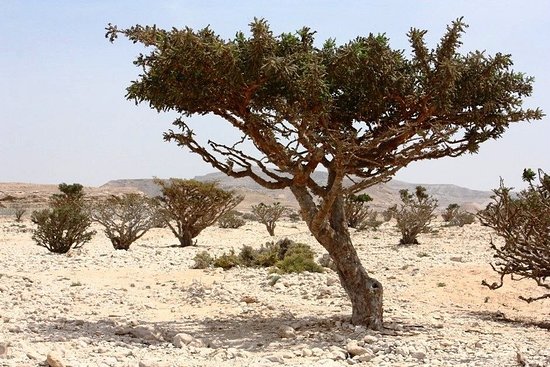
The story of the Frankincense Trees Salalah begins with the species Boswellia sacra, a hardy tree that thrives in dry and rocky landscapes.
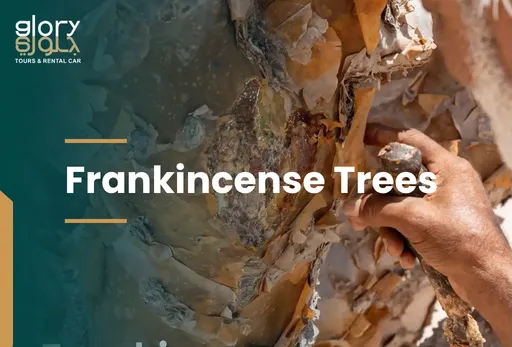
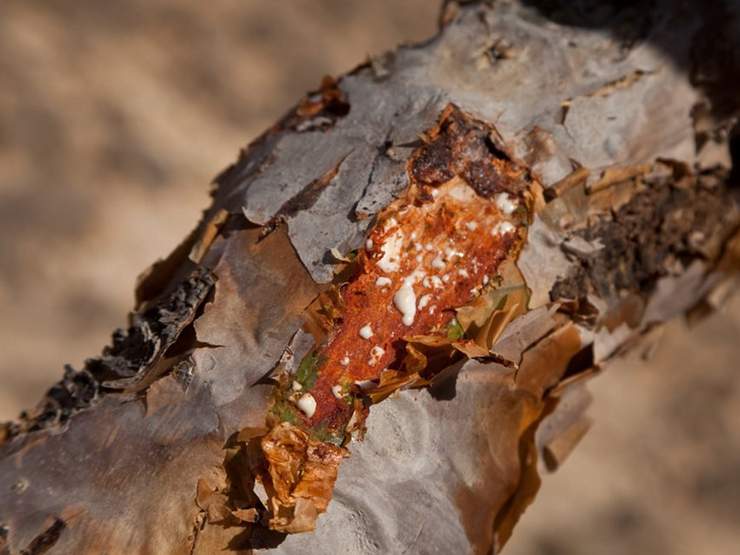
When the bark is carefully cut, the tree releases a milky sap. Once hardened, this sap becomes frankincense resin.
For centuries, this resin was one of the most valuable commodities in the ancient world.
It was used in Egyptian temples, Roman ceremonies, and religious rituals across the Middle East and Asia.
The Famous Frankincense Trade Routes
During ancient times, southern Arabia became wealthy from the frankincense trade.
Caravans carried the resin along desert routes that connected Dhofar with the Mediterranean world. These routes became known as the Frankincense Trail.
Several historical sites near Salalah played key roles in this trade network.
One of the most important ports was Khor Rori, which functioned as a major harbor for exporting frankincense across the Indian Ocean.
Another important trading city was Al Baleed Archaeological Park, a medieval port that connected Dhofar with global maritime trade routes.
Caravans also passed through the legendary desert settlement of Ubar, believed to be an important stop along the ancient trade network.
Today, these historic locations are recognized as part of the UNESCO “Land of Frankincense” heritage sites.
For more details, you can visit the official UNESCO page:
whc.unesco.org
Wadi Dawkah: The Valley With the Majority of Frankincense Trees Salalah
The majority of the Frankincense Trees Salalah can be found in Wadi Dawkah, a protected valley located about 40 kilometers north of Salalah.
This dry wadi is one of the most important natural frankincense forests in the world.
Hundreds of Boswellia sacra trees grow here naturally, making it the largest preserved concentration of frankincense trees in Oman.
Because of its historical and environmental importance, Wadi Dawkah is part of the UNESCO-listed Land of Frankincense heritage sites.
Visitors can walk through the valley and observe the trees in their natural habitat.
Some of these trees are believed to be several centuries old.
The area is carefully protected to preserve both the trees and the archaeological landscape connected to the ancient frankincense trade.
Other Places Where Frankincense Trees Grow in Dhofar
Although Wadi Dawkah contains the largest concentration, the Frankincense Trees Salalah are also found in several other parts of the Dhofar region.
Many of the highest-quality trees grow in the mountainous areas east of Salalah.
Jebel Samhan
One of the most famous regions for premium frankincense is Jebel Samhan.
The mountains here produce some of the finest frankincense resin known as Hojari, which is highly valued for its pale color and strong fragrance.
Hasik Coast
The coastal region near Hasik is another natural habitat for frankincense trees.
Trees growing in this area produce resin with distinctive aromatic qualities.
Dhofar Mountain Valleys
Frankincense trees also grow in scattered valleys throughout the Dhofar mountains.
These rugged environments provide the dry climate and rocky soil the trees need to survive.
Because the trees grow slowly and naturally in these areas, they remain an important ecological and cultural resource for Oman.
How Frankincense Trees Salalah Are Harvested
Harvesting frankincense is an ancient skill that has been practiced in Dhofar for centuries.
The process requires patience and knowledge to avoid damaging the tree.
Traditional Resin Tapping
Farmers begin harvesting in spring when temperatures start to rise.
Using a small tool called a Mangaf, they make shallow cuts in the bark of the tree.
A milky sap slowly flows out of these cuts.
Over several weeks, the sap hardens into small crystal-like pieces known as frankincense “tears.”
The first harvest is usually lower quality.
The second and third harvests produce the finest resin.
This process can be repeated several times during the harvesting season.
Protecting the Trees
To protect the health of the Frankincense Trees Salalah, harvesting must be done carefully.
Smaller trees receive fewer cuts, while larger trees can handle more.
Trees are also rested every few years to allow them to recover.
These sustainable practices help ensure that the trees continue producing resin for generations.
Modern Uses of Frankincense
Although frankincense was once primarily a luxury trade product, it continues to have many modern uses.
Aromatherapy
Frankincense essential oil is widely used in aromatherapy.
Its warm and earthy scent helps create a calming atmosphere and is often used in diffusers and meditation spaces.
Health Research
Modern research has shown that frankincense contains compounds with anti-inflammatory properties.
Scientists are studying its potential benefits for conditions such as arthritis and digestive disorders.
Skincare and Cosmetics
Frankincense is also popular in natural skincare products.
It contains antioxidants that may help improve skin appearance and reduce signs of aging.
Many facial oils, creams, and perfumes use frankincense as a key ingredient.
Explore Frankincense Trees Salalah With Our Tours
Many of the important frankincense locations are found in western Dhofar.
A guided tour is one of the best ways to explore these historic landscapes.
Our tours allow visitors to experience the region’s nature, culture, and heritage in a single trip.
You can explore these sites with:
West Salalah Half Day Tour
A short trip covering the region’s most famous natural attractions.
West Salalah Full Day Tour
A longer journey that explores more landscapes and cultural sites in Dhofar.
Both tours provide an opportunity to see the famous Frankincense Trees Salalah and learn about their role in Oman’s history.
Why Frankincense Trees Salalah Are Still Important Today
The Frankincense Trees Salalah are more than just part of the landscape.
They represent thousands of years of history, trade, and cultural tradition.
From ancient desert caravans to modern travelers exploring Dhofar, the story of frankincense continues to connect the past with the present.
Visiting these trees offers a unique opportunity to experience one of the world’s oldest natural trade traditions.
For anyone traveling to Salalah, seeing the frankincense trees in person is an unforgettable part of the journey.
Conclusion: Why Frankincense Trees Salalah Are a Living Heritage
The Frankincense Trees Salalah represent one of the oldest natural traditions still alive in the Arabian Peninsula. For thousands of years, these remarkable trees have supported trade, culture, and daily life in the Dhofar region.
From ancient caravan routes that connected Oman with Rome and India to modern visitors exploring the valleys of Dhofar, the story of frankincense continues to inspire people around the world.
Today, the majority of the trees can still be seen in the protected valley of Wadi Dawkah, while other important populations grow across the mountains and coastal areas of Dhofar, including Jebel Samhan and the surrounding eastern regions.
These landscapes are not only beautiful but also historically significant. They form part of the UNESCO recognized Land of Frankincense heritage sites that highlight the importance of this ancient trade.
Visiting the Frankincense Trees Salalah offers more than just a sightseeing experience. It allows travelers to connect with a tradition that has shaped civilizations for centuries.
If you are planning a trip to Salalah, exploring these historic trees should be at the top of your itinerary. The best way to experience them is through a guided journey across the region.
Our West Salalah Half Day Tour and West Salalah Full Day Tour give you the opportunity to visit the famous valleys, learn about frankincense harvesting, and discover the natural beauty that makes Dhofar one of the most unique destinations in Oman.
Seeing the Frankincense Trees Salalah in person is not just a visit to nature. It is a step into a living piece of history.